What is our Responsibility?
- Date: 20 July
- Time: 14:00 - 16:00
- Location: Open Paviljoen, Lange Voorhout (vlakbij Hotel Des Indes)
Karin Amatmoekrim in conversation with Willem Bongers-Dek and Lev Avitan on memory, collective consciousness and the future.
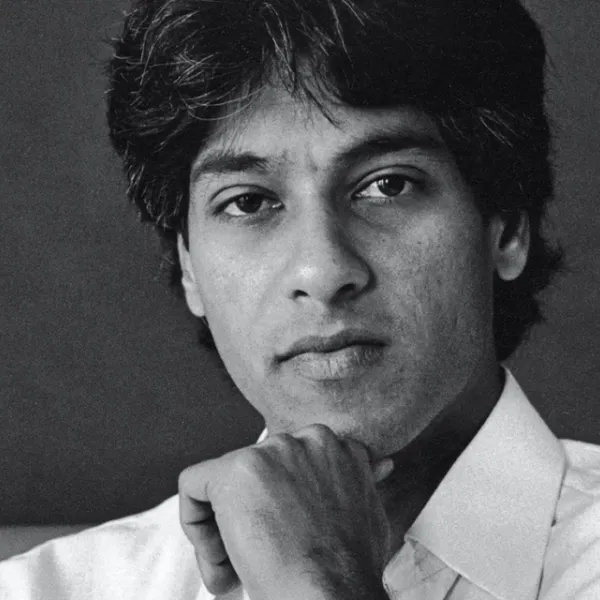
Anil Ramdas (1958 - 2012) was a writer, journalist and television presenter of Surinamese-Hindustani descent. As one of the first public intellectuals in the Netherlands, he connected his personal background with broader social issues. With great acuity he illuminated themes such as migration, identity and self-reflection. In his essays, columns and television appearances, he reflected on civilization and the multicultural society, seeing authorship as a moral duty to self-criticism. Ramdas was an outspoken advocate of cosmopolitan thinking, evoking both admiration and resistance.
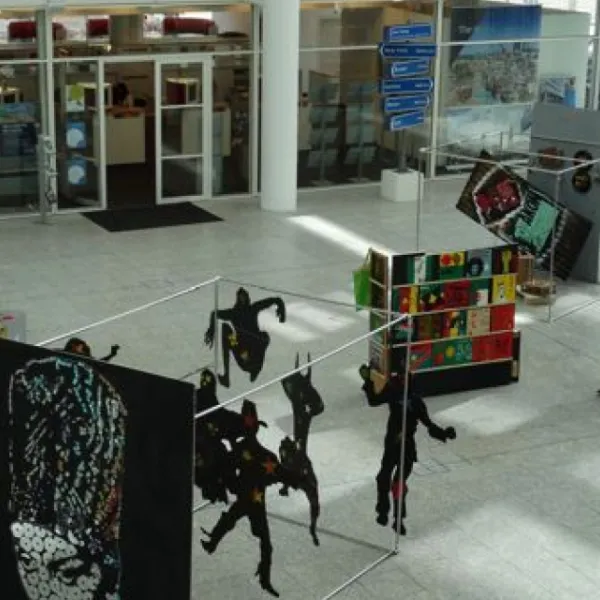
The project at West examines his intellectual legacy and asks the question: what can we learn from his insights today? As part of the exhibition In what kind of country do I actually live? we are organizing three public meetings about his work. This third and final afternoon focuses on knowledge, identity and self-reflection, with special attention to the moral dimension of his thinking.
Anil Ramdas repeatedly emphasized the importance of individual responsibility within larger social structures. This session focuses on the practical translation of his ideas: what does it mean today to act, to take a position? What does that require of writers, artists, media makers and citizens? What do we mean by engagement today, and how can we - as individuals and as (art) institutions - deal with Ramdas' legacy in a just and engaged way?
We explore what responsibility means within a postcolonial society. Who bears what responsibility? What is the role of memory and of language? How do we relate to the past, and to each other? We will discuss the social and moral significance of Ramdas' work: how it has developed over the past twenty years, and what it demands today in a society where identity, inequality and collective memory are once again under pressure.
Karin Amatmoekrim<.b> (1976, Paramaribo) is a Surinamese-Dutch writer and essayist. She emigrated to the Netherlands in 1981 and studied modern literature at the University of Amsterdam. She made her debut in 2004 with Het knipperleven and broke through with Het gym (2011). Her novel De man van veel (2013) is based on the life of Anton de Kom. In 2023 she obtained her doctorate with a biography of Anil Ramdas, In what kind of country do I actually live? for which she received the Dutch Biography Prize in 2024. She is currently working for De Bezige Bij on The book 'Suriname. A History'.
Willem Bongers-Dek is a literary scholar and cultural programmer. He is affiliated with deBuren, the Flemish-Dutch house for culture and debate, where he has been director since 2019. In this role, he has initiated numerous literary and cultural projects, including international initiatives such as citybooks, CELA and deBuren univerCity. His work is characterized by a strong focus on intercultural dialogue and the promotion of literature in the Low Countries.
Bongers-Dek en Anil Ramdas hebben nauw samengewerkt; zij vonden elkaar in hun inzet voor intercultureel begrip en reflectie op maatschappelijke vraagstukken.
Lev Avitan (1996, Arnhem) is een Nederlandse filosoof, theatermaker en spoken word-artiest. Hij vertelt persoonlijke verhalen die thema’s als identiteit, migratie, dekolonisatie en sociale rechtvaardigheid belichten. Zijn werk kenmerkt zich door zelfreflectie en een sterke maatschappelijke betrokkenheid. Avitan trad op bij festivals als Lowlands, Down the Rabbit Hole en Brainwash Festival, is actief als columnist en geeft workshops in poëzie en voordracht aan jongeren. Hoewel hij Anil Ramdas nooit persoonlijk heeft ontmoet, delen ze een inhoudelijke verwantschap: beiden pleiten voor een interculturele dialoog en sterke maatschappelijke reflectie.
Open Paviljoen, Lange Voorhout (vlakbij Hotel Des Indes)
Lange Voorhout
Sign Up