Orange the World 2025: there are still girls who don’t make it home
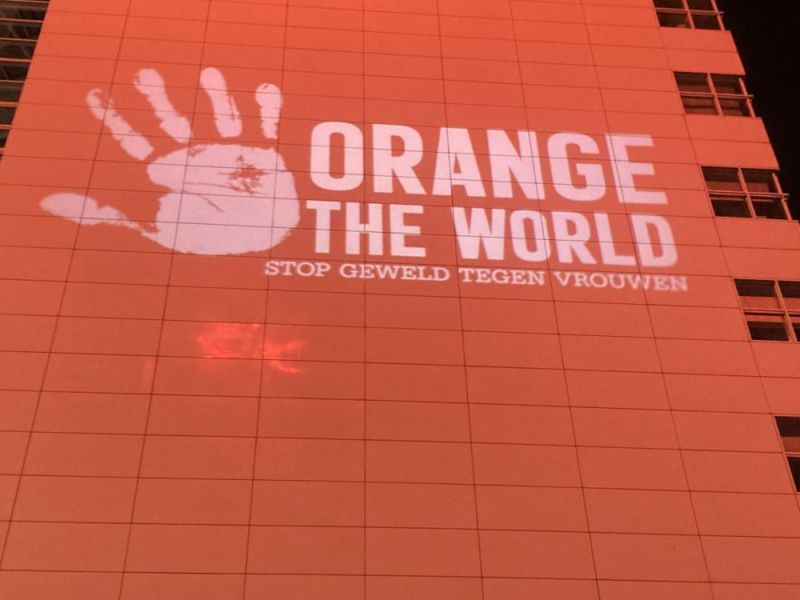
From the 25th of November to the 10th December, the world turns orange. Orange the World, the international campaign against violence against women, shines an orange light each year on a persistent societal problem: violence against women and girls. In the Netherlands, a country that likes to see itself as progressive and gender-equal, the reality is more dire than many assume.
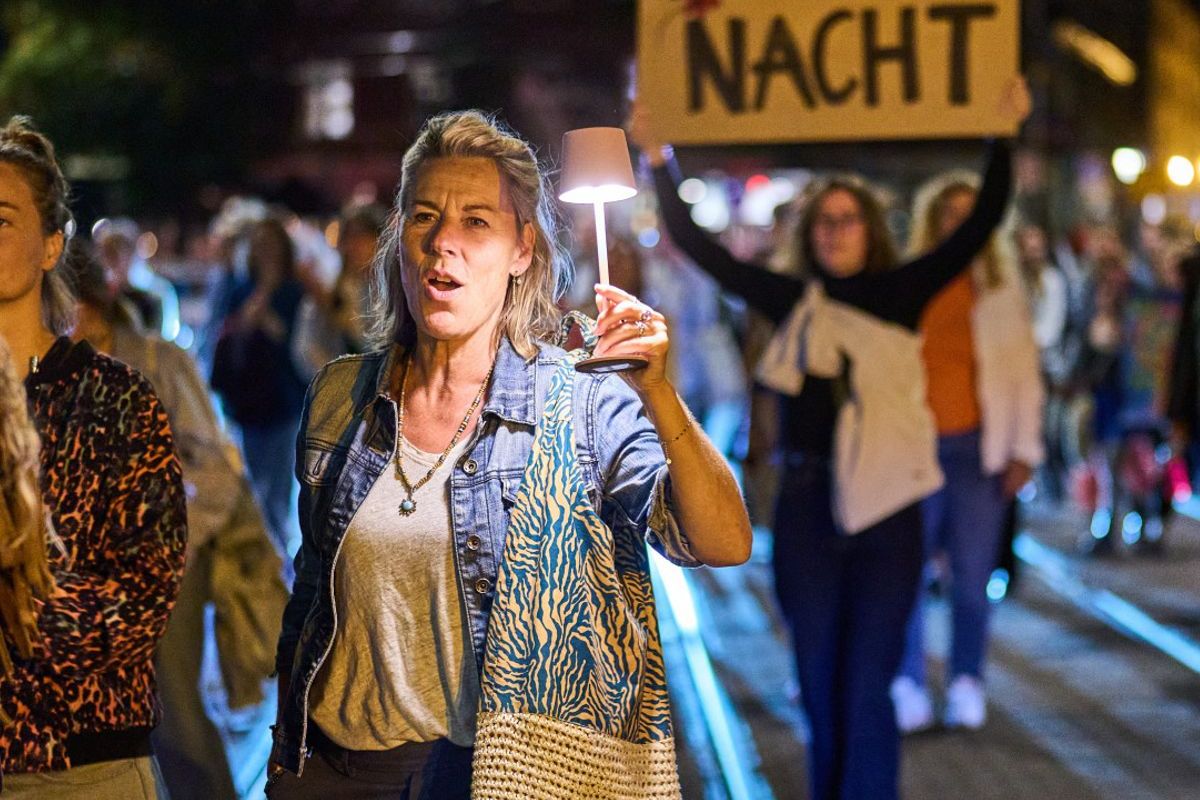
Three perspectives offer insights: writer and activist Tessel ten Zweege; grassroots activists Dolle Mina’s Den Haag; and Naomi Hija of EviSafe, a technological innovator in prevention and protection. Together, they paint a picture of (raising) awareness, urgency, and solutions.
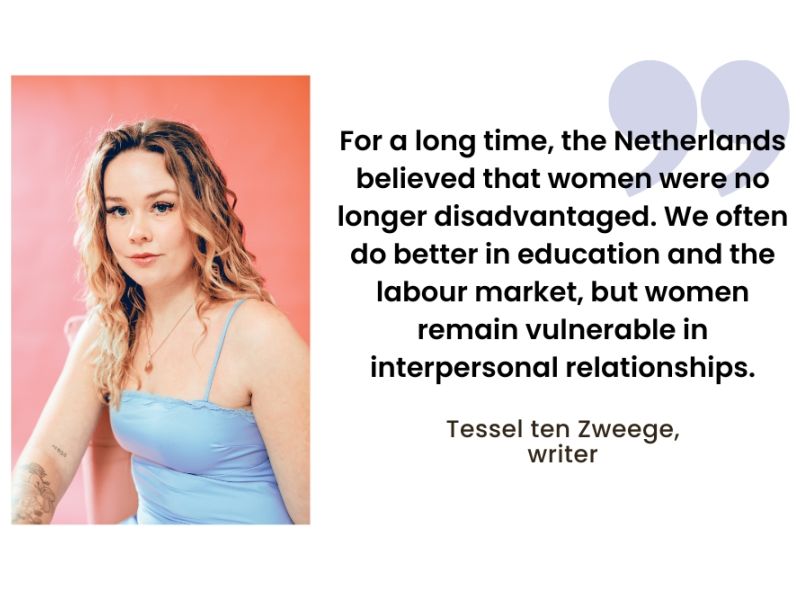
Tessel ten Zweege: “The violence is not decreasing at all”
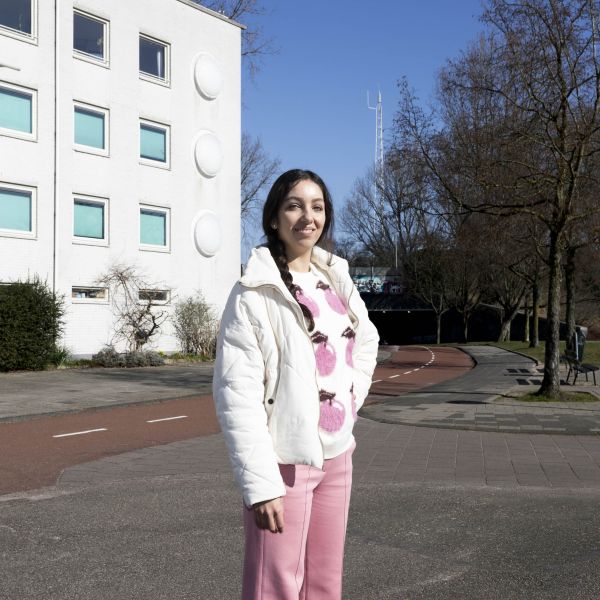
Tessel ten Zweege is a writer, programme maker, and activist. She is currently working on a documentary about the Second Wave of Feminism. With a background in Gender Studies and training at an art academy, she combines academic knowledge with accessible media: books and programmes that make complex topics understandable for a wide audience.
“What’s central to my work is that I love learning new things. A book is a great medium to share newly gained insights,” Tessel explains. “In Gender Studies, you learn important things about improving the world, often in difficult academic language. I wanted to make that accessible. I call it pop-feminism. Through books, and now documentaries and programmes, I can bring essential information to people.”
"Most murders are committed by (ex-)partners. For a woman, her own home is often the most dangerous place. Yet this is frequently overlooked. Many perpetrators are ‘ordinary’ men from our own surroundings.”
According to Tessel, the urgency of Orange the World remains high. “The violence is not decreasing at all. For a long time, the Netherlands believed that women were no longer disadvantaged. We often do better in education and the labour market, but women remain vulnerable in interpersonal relationships. Partner violence is still common, and being treated with respect is not a given.”
Tessel has conducted extensive research on femicide, a term that is still rarely discussed publicly in the Netherlands. “There’s a lot of debate around the definition of femicide. For me, it is the murder of women motivated by misogyny or a sense of ownership. It also includes trans women and sex workers. People in criminal law ask: how do you prove gender played a role?”
She refers to the case of Lisa from Abcoude, a young woman attacked in public by a man. “That was a terrible incident, but atypical. Most murders are committed by (ex-)partners. For a woman, her own home is often the most dangerous place. Yet this is frequently overlooked. Many perpetrators are ‘ordinary’ men from our own surroundings.”
For Tessel, part of the solution lies in awareness and prevention. She visits secondary schools with her impact tours, talks with students about healthy relationships and equality, and advocates for embedding this structurally in education.
For Tessel, part of the solution lies in awareness and prevention. She visits secondary schools with her impact tours, talks with students about healthy relationships and equality, and advocates for embedding this structurally in education. “After a guest lesson, I often get messages from girls on Instagram: ‘I didn’t dare say it in class.’ If it becomes part of the curriculum, it can make a much bigger difference.”
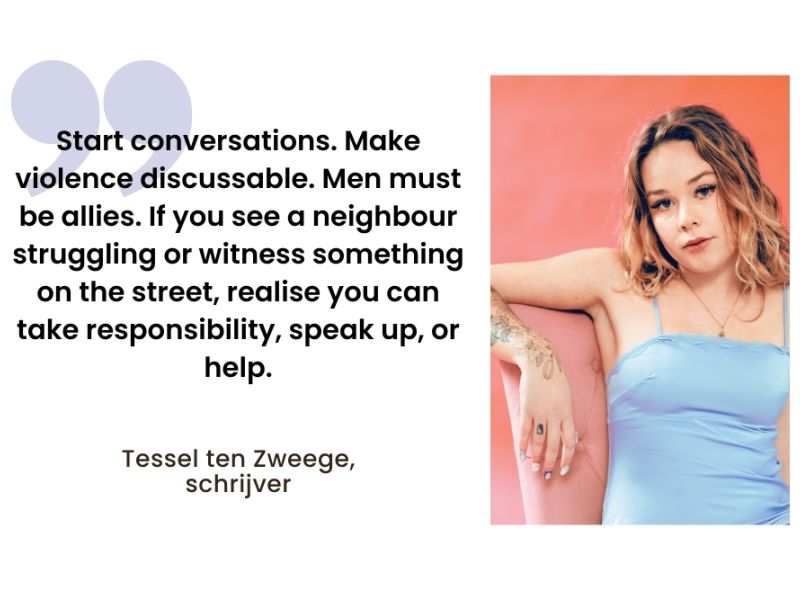
Photos by Bete van Meeuwen.
She also calls for broader societal involvement. “This is a men’s problem. When I started writing Femicide, parliamentary debates on this topic were attended by maybe one man, the rest were women. Men need to be part of the solution. NGOs like Emancipator focus on men’s emancipation; that’s where major change can happen. We can't solve this solely through criminal law, because that hasn’t reduced the problem.”
When asked what policymakers and individuals can do, she says: “Open conversations. Make violence discussable. Men must be allies. If you see a neighbour struggling or witness something on the street, realise you can take responsibility, speak up, or help.”
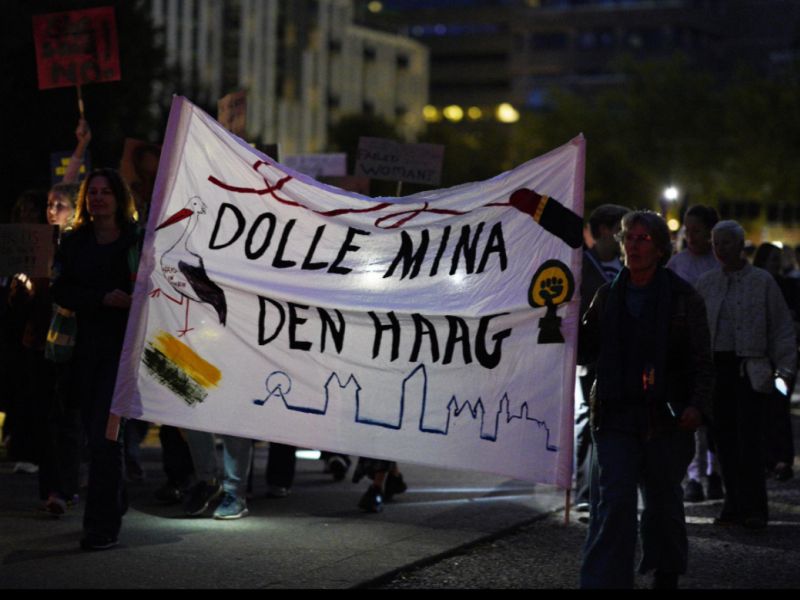
Dolle Mina’s Den Haag: playful, visible, and indispensable
The Hague’s Dolle Mina’s won the Joke Smit Prize in 2025, a recognition of their contribution to emancipation. Murièlle and Iris, involved since early this year, explain why their work matters.
"Men need to play a part in the solution."
“We started because safety for women is not self-evident, not even in The Hague,” says Murièlle. “Women’s safety must be brought to attention continuously. Winning the Joke Smit Prize last week was a moment to reflect, but above all to emphasise: there is still much to do.”
The actions of Dolle Mina’s range from playful street protests to femicide marches and silent protests at the Dutch Parliament. “It’s a balance between playful and serious,” Iris explains. “Sometimes we dress up as witches on Halloween to raise awareness among men about women getting home safely. Other times we organise a curfew action for men, so women can run after dark safely.”
The issue remains urgent because violence against women is structural. “There are still girls who don’t make it home,” says Murièlle. “Domestic violence, femicide, the pay gap, gender role patterns: everything is interconnected. Men believe they hold more power, both on the streets and at home. It starts at school, at a very young age.”
“There are still girls who don’t make it home.”
Dolle Mina’s see collaboration with other organisations as essential. “We need to communicate, build a strong network, and increase funding. Organisations like Veilig Thuis or youth mental health services often lack resources, causing victims to fall through the cracks.”
The Hague has, in their view, an international responsibility. “The city brands itself as the International City of Peace and Justice, yet police and justice systems still lack sufficient knowledge. Training on domestic violence and violence against women is urgently needed, and more funding would make a real difference. The Netherlands is lagging; we don’t have to reinvent the wheel, we can learn from other countries.”
Structural change, they emphasise, requires more focus on perpetrators and less on victims. “Women (victims) often have to leave their homes, whilst men can stay. Victims receive little help and risk homelessness. The legal system is too considerate of perpetrators. We need fairer solutions that prioritise the safety and perspective of women and children.”
"It is a societal problem, not just a women’s problem."
Their message to individuals is clear: learn to recognise signals, stand by victims, and start conversations. “Violence can affect your neighbour, your sister. It is a societal problem, not just a women’s problem. Men are needed too, and everyone can join the movement.”
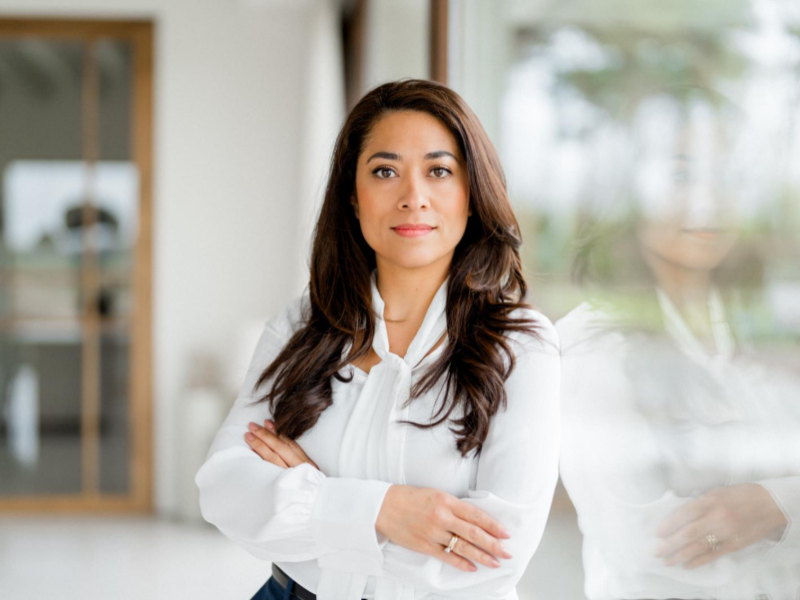
Naomi Hija and EviSafe: technology against violence
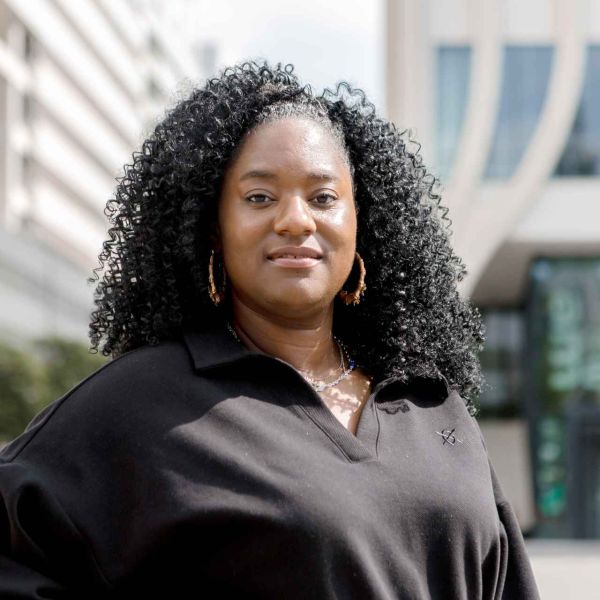
Naomi Hija works through EviSafe to improve prevention and protection via smart technology. The app helps victims of violence maintain their safety and document evidence. Naomi has a background in youth care and is herself a survivor of sexual violence. “When you’ve been through that, you only run harder to make an impact,” she says.
EviSafe was born from the combination of Naomi’s experience and her partner’s technological expertise. “We wanted to use technology to protect victims behind closed doors. Conversations with victims, professionals, police and neighbourhood officers showed us that many victims fall through the cracks. Only one in ten turns to the police or Veilig Thuis. Our app can help register signals and find the right help faster.”
Naomi explains why victims often do not seek help: “They’re confronted with victim blaming, are not taken seriously, or feel ashamed. That’s why we also focus on their surroundings: family, friends, GPs. Everyone must learn to recognise and take signals seriously.”
Only one in ten victims turns to the police or Veilig Thuis... They’re confronted with victim blaming, are not taken seriously, or feel ashamed."
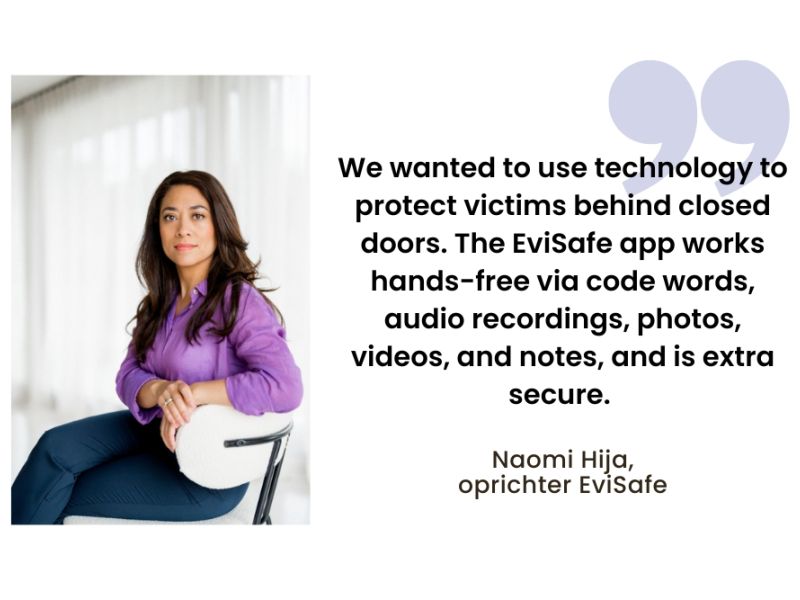
The EviSafe app works hands-free via code words, audio recordings, photos, videos, and notes, and is extra secure. A panic password can erase the app if an abuser gains access, and users can change the app’s icon to hide it. “We want victims to stay in control, and for helpers and institutions to be better informed.”
For Naomi, it’s about more than technology, it’s about societal change. “Talk about it. Be a trusted person. Let victims know they are heard. Often it takes years before someone dares to share their story. If you offer support, you can help start a healing process and prevent the violence from continuing.”
EviSafe is currently working on a Guardian app, allowing victims to alert a trusted person immediately via phone, with an audio recording as a secondary witness. “It’s about more than prevention; it’s a step towards recognition and safety, giving victims a voice.”
“Talk about it. Be a trusted person. Let victims know they are heard. Often it takes years before someone dares to share their story. If you offer support, you can help start a healing process and prevent the violence from continuing.”
Awareness, action, and change
The three perspectives, different as they are, all lead to a key point: violence against women is not an individual problem, but a societal and systemic one that requires action at all levels. Tessel emphasises that education, conversation, and men’s emancipation are crucial. Dolle Mina’s show that grassroots activism creates visibility and political pressure. Naomi demonstrates that technology and societal change must go hand in hand to protect victims and address perpetrators.
Orange the World is a moment of awareness, but the message from all three participants is clear: change does not stop on the 10th of December. It requires structural measures, open dialogue, and engagement from everyone, from policymakers to neighbours and friends.
“Violence is not a private issue. If it happens at this scale in the Netherlands, it is a societal issue. Dare to intervene."
Tessel concludes: “Violence is not a private issue. If it happens at this scale in the Netherlands, it is a societal issue. Dare to intervene. Know that you can speak up or support someone. Change begins with awareness and responsibility.”
Murièlle from Dolle Mina’s adds: “You are never alone. There is always someone who can help. Trust that you will be heard, and know that organisations and people exist who fight for your safety.”
Naomi ends with a personal message: “Talk about it. Show that you stand behind this cause. Create a culture where it’s allowed to be discussed. Everyone can contribute to ending violence. It starts with listening, acknowledging, and acting.”
Orange the World is not just orange lighting or a symbolic gesture. It is a call to face reality, listen to the stories of victims, and actively work toward a safer society. It is a call to all citizens, policymakers, and organisations: we can only end violence against women together.
Donate to Tessel’s crowdfunding campaign for her upcoming documentary
De Feministen van Nu door Tessel
And follow the work of Tessel ten Zweege, the Dolle Mina’s, and Naomi Hija via:
- Tessel ten Zweege Instagram
- De Dolle Mina's Den Haag Instagram, Dolle Mina's Nederland
- EviSafe.nl